
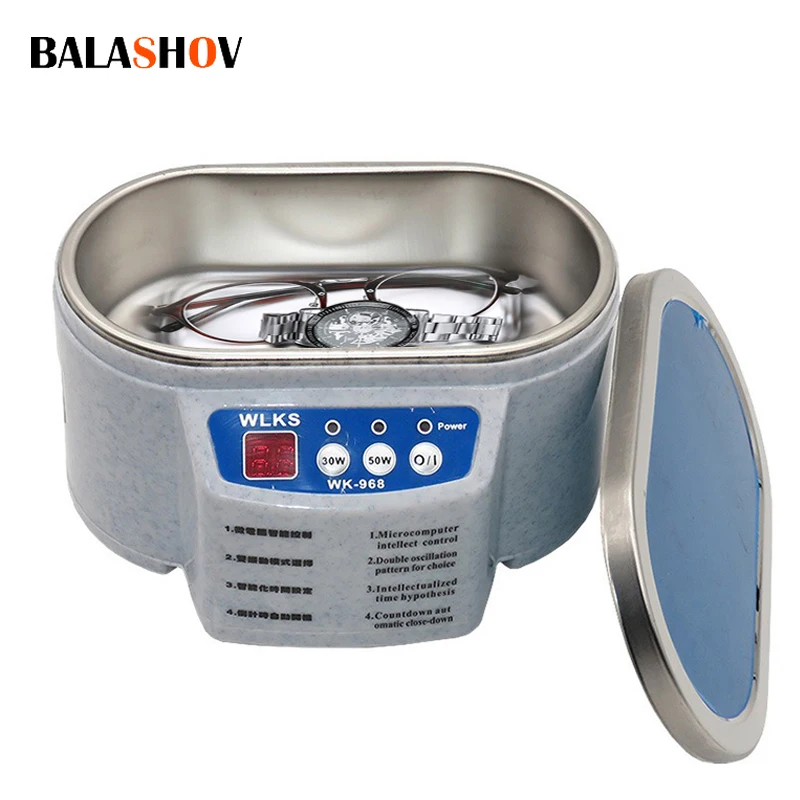
An ultrasonic jewelry cleaner is a small water bath that scrubs with sound: a transducer vibrates the tank at around 40–50 kHz, millions of microscopic bubbles form and collapse, and grime gets knocked out of crevices a brush can’t reach. This digital 600 ml model, usually in the $20–30 range on AliExpress, has two power modes, a timer, and a stainless tank, and buyers rate it 4.6 out of 5 across 306 reviews. It cleans rings, glasses, and watch bracelets properly. The main things to know before ordering are the plug situation and which stones should never go in one.
Specs at a glance
| Spec | What you get |
|---|---|
| Type | True ultrasonic bath (transducer + stainless steel tank) |
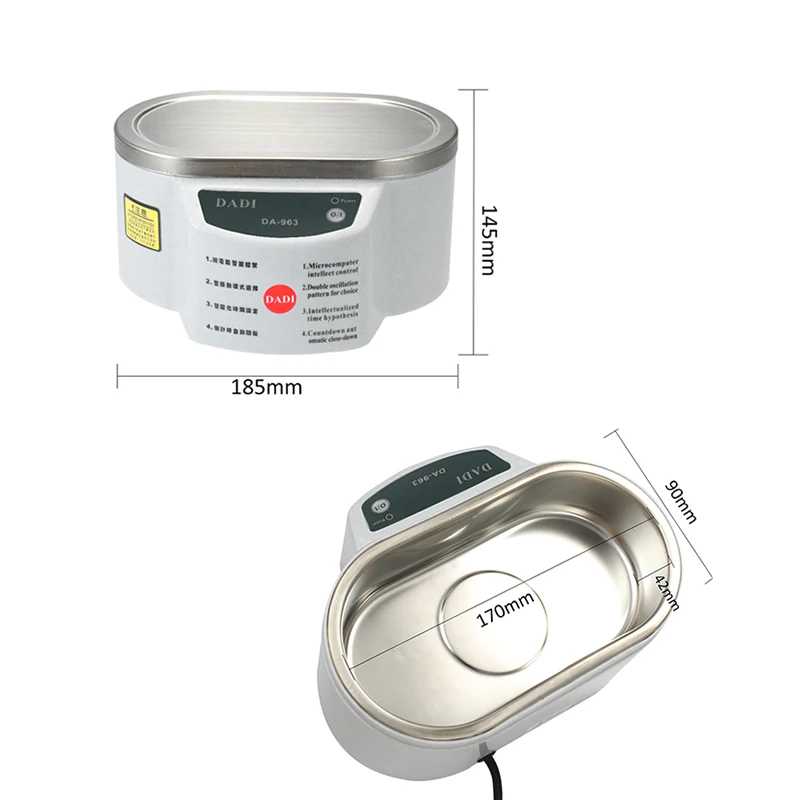
| Tank | ~600 ml, fits rings, glasses, watch bracelets, small parts |
| Power modes | Two levels (30 W / 50 W) plus a timer |
| Runs on | Mains power — check the plug type for your country before ordering |
| Cleans with | Plain tap water; a drop of dish soap helps |
| Best for | Rings, chains, earrings, glasses, watch straps, razor heads, small metal parts |
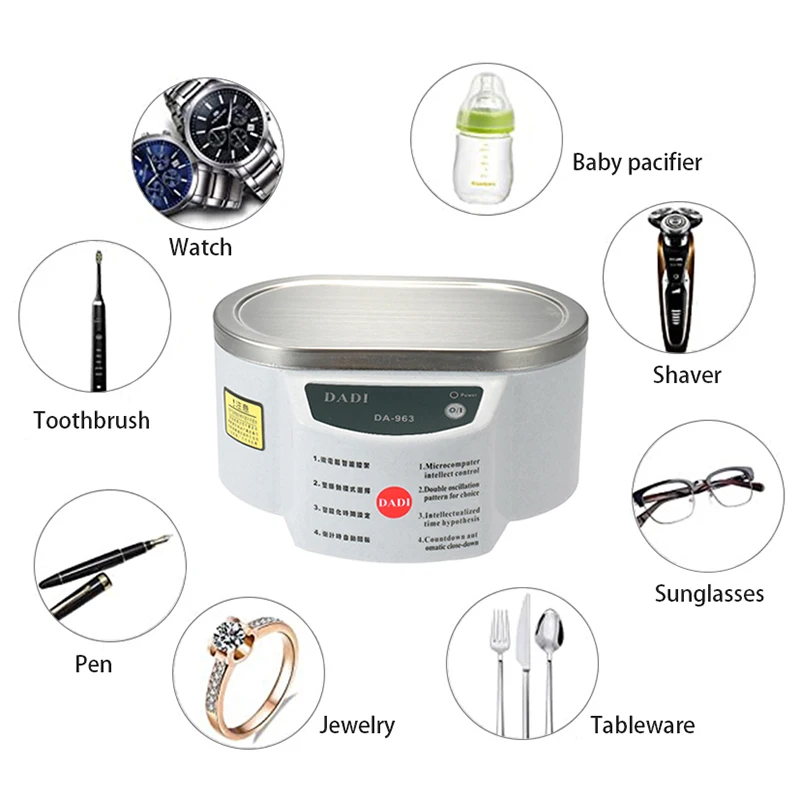
Watch out: not every “ultrasonic” cleaner is ultrasonic
Before this model, we looked at the cheaper $5–12 “ultrasonic” pods that dominate the search results. Their buyer reviews tell one story: “The claim that this is an ultrasonic cleaner is false: the device is a simple vibration motor,” writes one, and that listing averages 3.8 stars against this one’s 4.6. A vibration motor shakes the water; it does not produce cavitation, and it will not clean the inside of a ring setting.
The tell is simple. A real ultrasonic bath states a frequency (40–50 kHz), draws serious power (30 W and up), and has a metal tank. If a listing is very cheap, battery-powered, and all-plastic, it is almost certainly a vibrating bowl. This is the same pattern we describe in our guide on what not to buy on AliExpress: the spec that matters is the one fakes leave out.
How well does it clean?
On metal jewelry the result is what you buy one for: fill with warm tap water, add a single drop of dish soap, run a 3–5 minute cycle, and rings come out with the film of skin oil and lotion gone from places you can’t brush. Glasses lose the grime that builds where the nose pads meet the frame. Watch bracelets, the honest test of any cleaner, shed visible grey residue into the water.
Two power modes are more useful than they sound. The 30 W level is enough for glasses and lightly worn jewelry; 50 W with a second cycle handles neglected pieces. One buyer who compared modes puts it plainly: having 30 and 50 is “a big” advantage over single-mode units. Expect help, not magic; a 4-star review notes it “does clean, yet not perfect” on the first pass. Heavily tarnished silver still needs a polishing cloth afterwards; ultrasound removes dirt, not oxidation.
What buyers report (4.6★ from 306 reviews)
The breakdown: 240 five-star, 35 four-star, and 21 reviews at two stars or below. The praise is consistent (works as described, sturdy for the money). The complaints cluster on three things worth knowing:
- The plug. Several buyers received an EU or China plug regardless of shipping country. A US buyer warns: “The cord has china plug beware. Not american plug.” Check the plug option at checkout or budget a $2 adapter.
- Thin packaging. Multiple reviews mention dented boxes. The units inside survived, but it explains the occasional cosmetic complaint.
- Rare early failures. A couple of reviews report a unit dying after first use. At 306 reviews that’s a small tail, and exactly the case AliExpress buyer protection covers. Our guide to how AliExpress refunds work explains the process.
What should never go in an ultrasonic cleaner
This is the part most listings skip. Cavitation is safe for solid metal and hard stones, and risky for anything soft, porous, or glued:
- Keep out: pearls, opals, emeralds, amber, coral, turquoise, anything foil-backed or glued (most costume jewelry), and watches that are not specifically water-resistant with a sealed case.
- Fine: plain gold and silver, platinum, diamonds and sapphires in solid settings, stainless steel, glasses frames, razor heads, coins, small tools and parts.
When in doubt, a bowl of warm soapy water and a soft brush is the safe fallback for delicate pieces.

Pros and cons
- ✓ Real ultrasonic cleaning (stated frequency, stainless tank), not a vibrating bowl
- ✓ Two power modes plus a timer — gentle for glasses, stronger for neglected jewelry
- ✓ Big enough for glasses and watch bracelets, small enough to live in a drawer
- ✓ 4.6★ across 306 buyer reviews
- ✗ Plug lottery — you may need an adapter
- ✗ Flimsy retail box (units generally arrive fine)
- ✗ Won’t fix tarnish or restore soft/porous stones — nothing ultrasonic will
Is this ultrasonic jewelry cleaner worth it?
Yes, with the caveats above. For $20–30 you get the same cleaning mechanism jewelers charge per-visit for, in a size that handles the things people actually want cleaned: rings, chains, glasses, watch bracelets. Skip the $5 “ultrasonic” pods entirely; if your budget stops there, soapy water and a brush do more. And keep the soft stones out of it.

Frequently asked questions
Does it work with just water?
Yes. Warm tap water alone does most of the job; one drop of dish soap noticeably helps with oily films. Avoid harsh solvents in the tank.
Will it damage my diamonds?
Diamonds themselves are safe. The risk is loose stones: cavitation can free a stone that was already loose in its setting, so check settings first and skip pieces with glued or foil-backed stones.
How long should a cycle run?
3–5 minutes is the useful range for jewelry and glasses. Very dirty pieces do better with a second short cycle in fresh water than one long one.
Can I clean my watch in it?
The bracelet, yes — detached, ideally. The watch head only if it is genuinely water-resistant with intact seals; vintage and non-rated watches should never go in.
Check the current price on AliExpress
As an AliExpress affiliate we earn from qualifying purchases.
Would you buy this?
Cast your vote and see what other readers think.
Share your experience